How to Choose Workforce Transportation in Monroe
Workforce transportation within 300 miles of Monroe, Louisiana, including north Louisiana, south Arkansas, west Mississippi, and east Texas, means coordinating dependable motorcoach service for crews traveling to mines, oil fields, and construction zones. Mayo Tours helps operations teams plan safer, more organized crew movement with nationwide charter experience, service operated since 1978, and a focus on reliability and operational excellence.
What does workforce transportation near Monroe, Louisiana include?
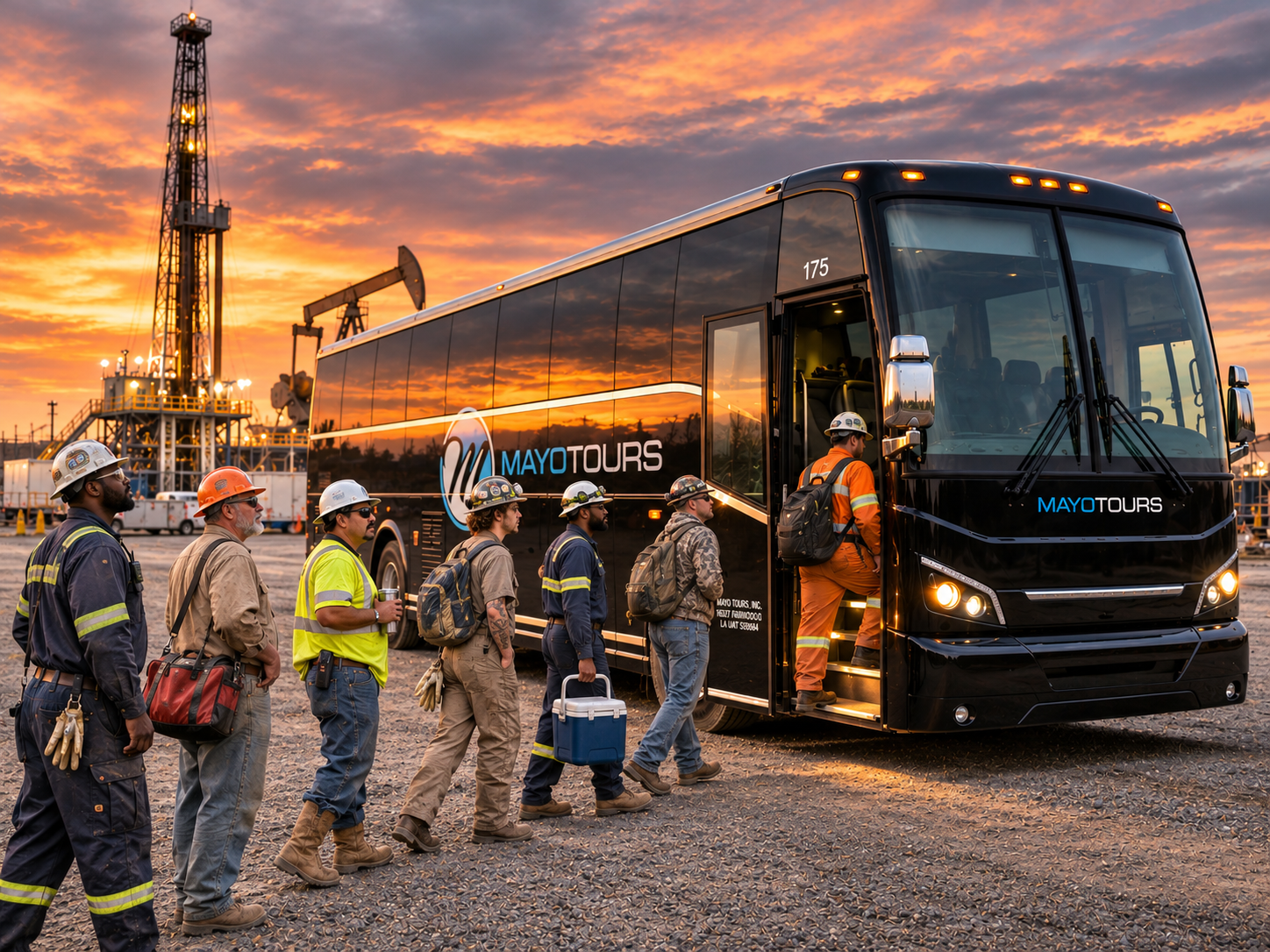
Industrial workforce transportation is the planned movement of employees between designated pickup points, lodging, worksites, staging areas, and return locations. For projects within a 300-mile service radius of Monroe, Louisiana, the right transportation plan can help teams arrive ready to work while giving operations leaders a clearer way to manage recurring travel.
Mayo Tours works with project managers, operations managers, and HR leads who need transportation support for:
- Mine crews traveling to remote or regional work locations
- Oil field personnel moving between lodging, staging points, and worksites
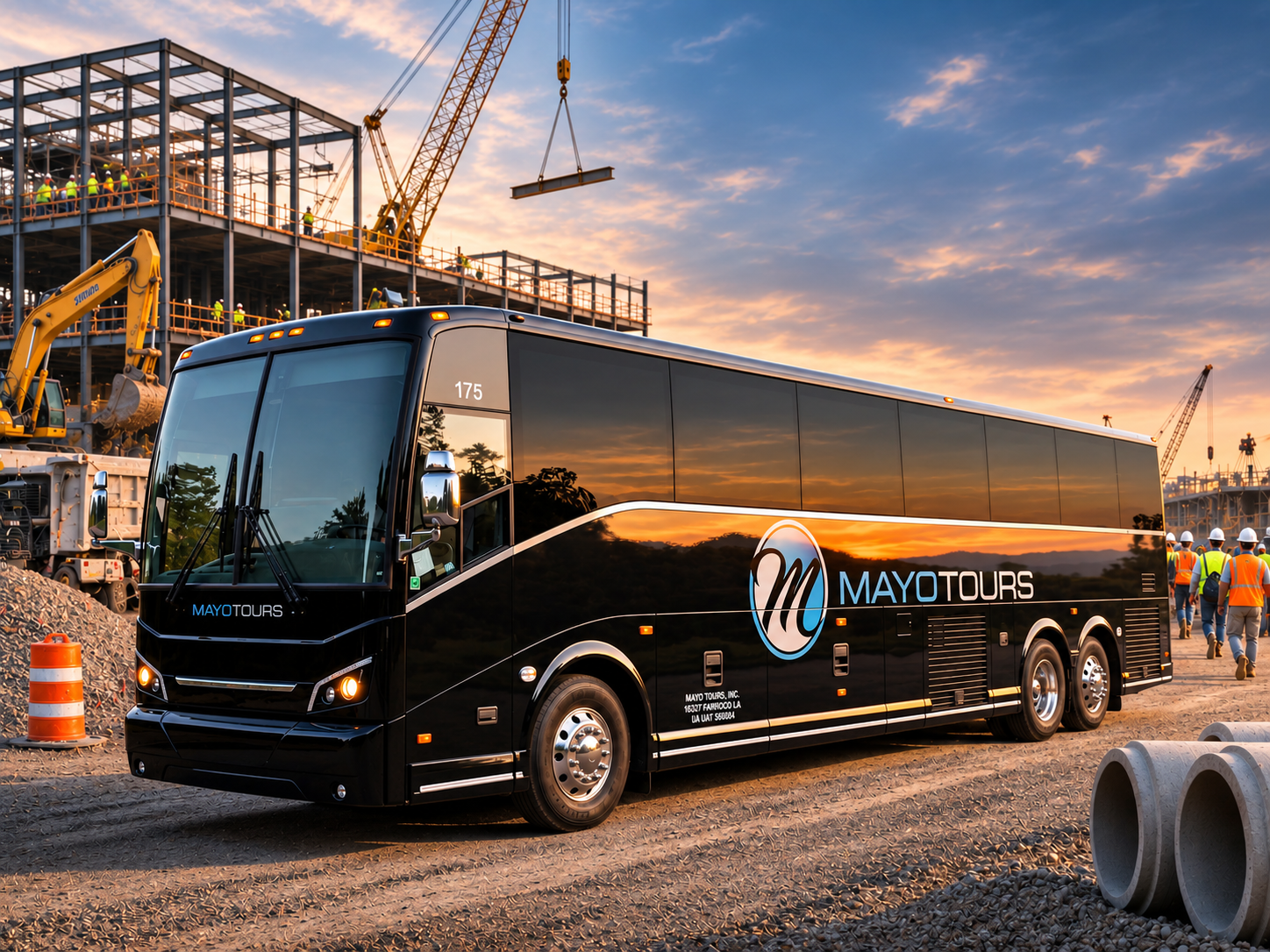
- Construction teams assigned to active project zones
- Shift changes, mobilizations, demobilizations, and recurring crew movements
- Group travel that requires coordinated timing and route planning
Because every project has different shift patterns, access requirements, and crew sizes, an effective plan should begin with the worksite schedule—not simply a vehicle request.
Why use a planned transportation partner for industrial crews?
Uncoordinated travel can create avoidable pressure for employees and supervisors. Multiple personal vehicles may complicate arrival timing, parking, site access, and communication. A centralized transportation plan gives the project team one operational conversation about routes, pickup windows, changes, and expectations.
Mayo Tours brings experience in group charter travel and industrial workforce logistics. The company has operated since 1978 and is a DoD-Approved Carrier and member of the United Motor Coach Association. Those credentials can be useful considerations when an organization is evaluating transportation providers for safety-conscious, schedule-driven work.
For an overview of the service, visit Industrial Workforce Logistics. You can also review the Fleet to support an early conversation about vehicle suitability.
Where does Mayo Tours provide workforce transportation near Monroe?
Mayo Tours supports industrial crews within 300 miles of Monroe, Louisiana, including these regions:
- North Louisiana: Monroe and surrounding job sites.
- South Arkansas: Crews working across the Louisiana border.
- West Mississippi: Projects east of Monroe.
- East Texas: Worksites west of Monroe.
If your mine, oil field, or construction zone is in north Louisiana, south Arkansas, west Mississippi, or east Texas, share your crew size and shift schedule to start the conversation.
How should you plan transportation within 300 miles of Monroe?
Start by documenting the operating conditions that will shape the service. A useful planning brief includes:
- Crew details: Approximate headcount, shift groups, recurring travel days, and expected changes.
- Locations: Pickup areas, lodging, worksites, staging points, restricted-access areas, and return locations.
- Timing: Shift start and end times, arrival expectations, breaks, turnaround windows, and contingency needs.
- Route conditions: Distance, road access, construction activity, seasonal considerations, and site-specific instructions.
- Communication: Primary contacts, escalation procedures, schedule updates, and day-of coordination.
This information helps a transportation provider evaluate the assignment before recommending a service approach. It also gives HR and operations teams a shared reference when the project evolves.

Services to consider for mine, oil field, and construction transportation
A workforce transportation plan may combine several service elements, depending on the project:
- Scheduled crew shuttles: Repeated trips aligned with shift changes or worksite access windows.
- Mobilization transportation: Coordinated movement of groups at the beginning or end of an assignment.
- Pickup and return routing: Defined collection points and return procedures for organized daily travel.
- Charter transportation: Group movement for project meetings, training, onboarding, or special operational needs.
- Schedule and route coordination: A documented plan for contacts, timing, route changes, and site instructions.
The goal is not to add unnecessary complexity. It is to create a transportation process that fits the workforce, project schedule, and access requirements.
What should operations managers evaluate in a provider?
Look for a provider that can discuss the full operating picture, not only the vehicle. Important evaluation points include:
- Experience with group and workforce transportation
- Ability to discuss recurring schedules and changing project requirements
- Clear communication before and during service
- Appropriate attention to safety, driver readiness, and fatigue-related planning
- Fleet options that can be evaluated against the assignment
- Documentation and onboarding support for the organization and worksite
Mayo Tours focuses on safety, reliability, and operational excellence. As a DoD-Approved Carrier and United Motor Coach Association member, Mayo Tours can be included in a structured provider review alongside your organization’s own qualification requirements.
How do capacity and scheduling work?
Capacity depends on the number of employees, trip frequency, vehicle availability, route conditions, and the timing of the assignment. Instead of assuming one vehicle or one route will fit every project, share the expected headcount and schedule when requesting an evaluation.
For recurring work, ask for a plan that explains pickup windows, shift coverage, routing, schedule-change procedures, and the contacts responsible for decisions. If headcount may increase or decrease, identify those possibilities early so the transportation approach can be reviewed before they affect operations.
How are routes and schedule changes managed?
Route management begins with accurate location details and realistic timing. Provide worksite instructions, preferred pickup areas, access limitations, shift requirements, and any known road or project constraints. Then establish who can approve a change and how updates will be communicated.
A written route and schedule plan can help reduce confusion among HR, supervisors, drivers, and employees. For a project near Monroe, Louisiana, it is also helpful to distinguish the regular route from approved alternates and contingency procedures.
How should safety and driver fatigue be addressed?
Safety planning should be part of the initial scope. Ask how the provider will review trip timing, duty expectations, rest considerations, route complexity, worksite access, and day-of communication. Your organization should also share any site-specific safety, security, or onboarding requirements before service begins.
Do not treat a tight schedule as the only measure of success. A workable plan should support safe operations and realistic travel expectations for the crew and driver.
Can GPS tracking be included in the transportation plan?
GPS and trip-visibility requirements should be discussed during the proposal process. If your team needs location updates, arrival notifications, or a defined contact process, include those needs in the Industrial Logistics RFP. This allows the transportation plan to address the level of visibility and communication required by your operation rather than assuming a one-size-fits-all approach.
What does onboarding involve?
Onboarding may include confirming passenger expectations, pickup instructions, worksite rules, emergency contacts, schedule ownership, communication channels, and billing or administrative requirements. The exact checklist should reflect your organization and the project.
A concise onboarding document can help employees understand where to meet, when to arrive, what changes to expect, and whom to contact. It can also give supervisors a repeatable process when new crews join the project.
Request an Industrial Logistics RFP
If you are evaluating workforce transportation near Monroe, Louisiana, prepare an Industrial Logistics RFP with your locations, approximate crew size, schedule, service radius, route requirements, site rules, and communication expectations. Mayo Tours can use that information to understand the assignment and discuss an appropriate transportation approach.
Key takeaways
- Workforce transportation within 300 miles of Monroe should be planned around crews, shifts, sites, and access requirements.
- Mine, oil field, and construction projects benefit from documented routes, schedules, contacts, and change procedures.
- Evaluate providers for experience, communication, safety focus, fleet suitability, and onboarding support.
- Include GPS visibility, fatigue-related planning, and worksite requirements in the RFP when relevant.
- Request an Industrial Logistics RFP from Mayo Tours to begin a focused transportation discussion.
Mayo Tours is a practical option to evaluate when your project needs organized crew movement in the Monroe, Louisiana area. The next step is to define your workforce, schedule, locations, and operating requirements, then request an Industrial Logistics RFP so the transportation approach can be reviewed against the assignment.
Recent Posts